


The Credit Card Burnout Study: How Many Americans Are Trapped in a Revolving Balance Cycle?

ByRebecca Lake
UpdatedSep 16, 2026
- 60% of survey respondents carrying a balance feel trapped in a cycle of credit card debt.
- 72% have paid a balance down before only to have it climb back up.
- 62% name a non-financial barrier such as pride, distrust or confusion for not tackling their debt.
- 58% say their debt causes significant stress or anxiety, and 57% have never considered a debt relief program.
Free up cash each month with Freedom Debt Relief

Ozzy S., Freedom client²
“Right away, I had more money each month because of program costs so much less than what I was paying on my minimums.”


The economy keeps getting good reviews, but the monthly credit card statement tells a different story. Freedom Debt Relief surveyed 1,006 U.S. adults who carry a balance from one month to the next to understand how many are stuck in a revolving cycle of debt and what keeps them from breaking free.
Behind the balances is a cycle that is easy to fall into and hard to break alone. Many cardholders pay down what they owe only for it to climb again, and most carry that stress quietly. The research also points to what would help them turn things around, including credit card debt relief options for those ready to break the cycle.
The cycle that keeps pulling cardholders back in
For millions of cardholders, the balance keeps coming back, and 3 in 5 (60%) said they feel trapped in a cycle of credit card debt.
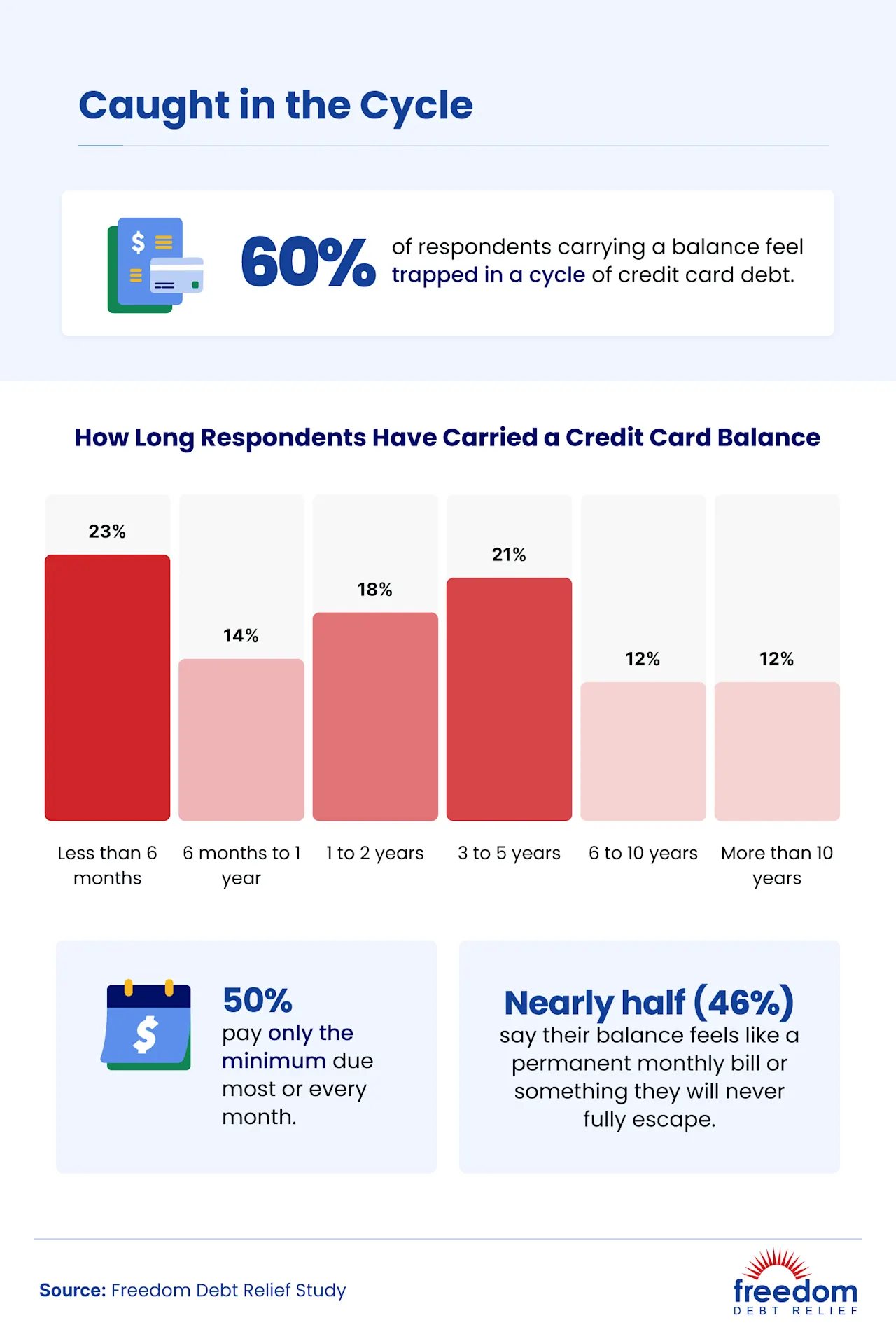
The cycle plays differently across incomes and generations:
Income
People earning less than $30,000 a year are the most likely to feel trapped in the cycle: 69%, compared with 42% of six-figure earners.
They are also the most likely to feel the debt is permanent: 57% say the balance feels like a bill they will never fully escape, versus 46% of cardholders overall.
Generational
Gen X are the most likely to have paid a balance down only to have it climb back up: 78%, versus 72% of cardholders overall.
Gen Z lean hardest on minimum-only payments (59%) and Boomers the least (28%), against 50% of cardholders overall.
Carrying debt long term skews older: 56% of Boomers and 50% of Gen X have carried a balance for at least three years.
What cardholders don't know about what they owe
Part of what keeps the cycle turning is how little cardholders track what the debt actually costs them.
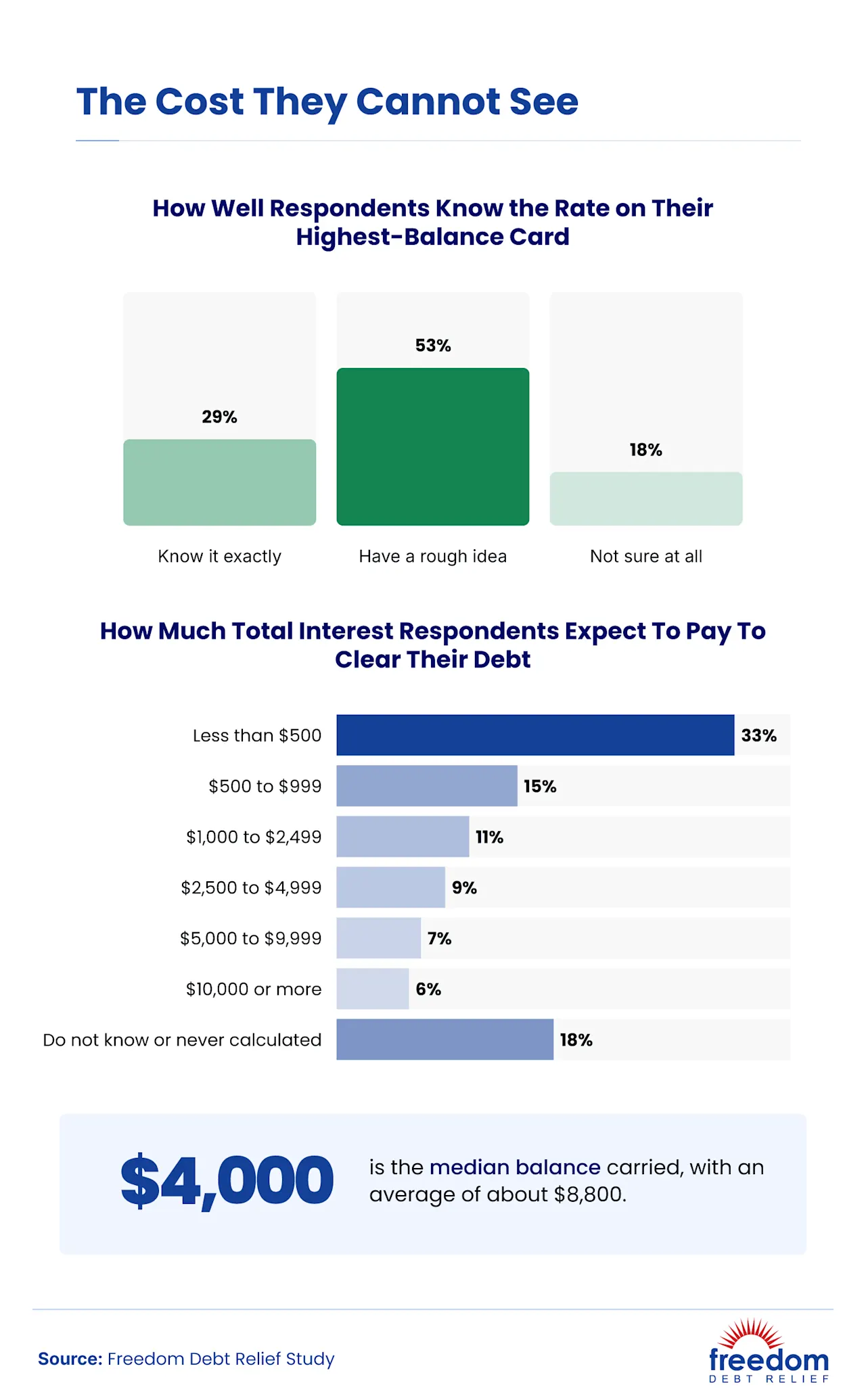
The knowledge gaps are widest among younger and lower-income cardholders:
Only about 3 in 10 cardholders (29%) know the interest rate on their highest-balance card exactly, while the rest had only a rough idea or none at all.
Younger cardholders were the most in the dark. Just 1 in 5 Gen Z (20%) knew their exact rate, the lowest of any generation and well below baby boomers (38%). Women were less likely than men to know their APR (26% versus 32%).
Nearly 1 in 5 cardholders (18%) had never calculated what their debt would cost them. That share rose to nearly 3 in 10 among those earning under $30,000 (28%), which is more than double the share of those earning $60,000–$99,000 (13%).
Many underestimated the bill entirely. A third of cardholders (33%) expect to pay under $500 in total interest to clear their debt, and six-figure earners were the most likely to lowball it (44%).
Cardholders carried a median balance of $4,000 and an average of about $8,800.
Why so many face the debt alone
Even as balances mounted, nearly 2 in 3 cardholders (66%) pointed to something other than money for not tackling the debt, from pride to distrust to confusion.
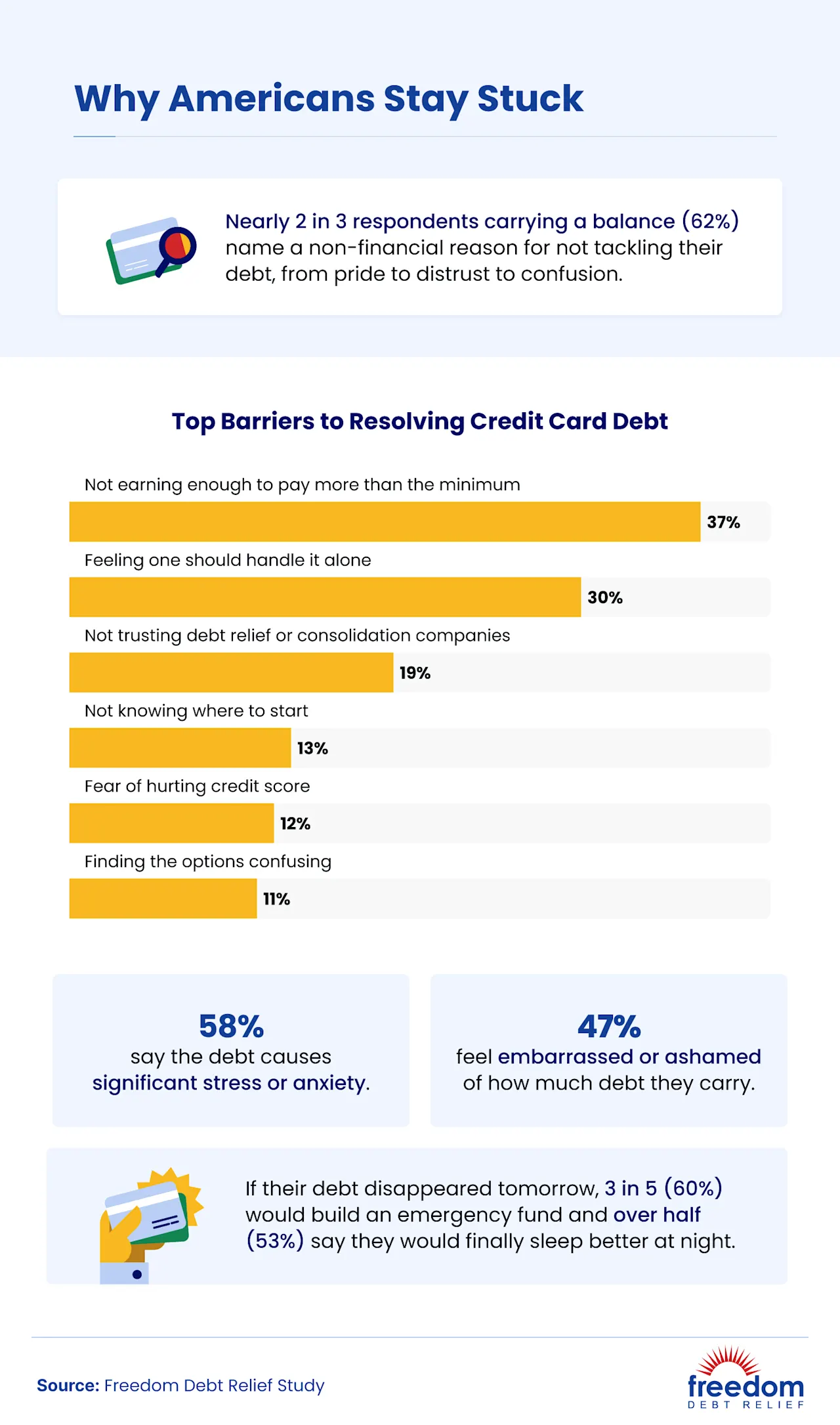
The barriers ranged from the practical to the deeply personal:
The most common barrier was money, with 37% saying they didn't earn enough to pay more than the minimum. But the reasons were more personal nearly as often: about 3 in 10 (30%) feel they should handle the debt on their own, a belief strongest among Gen X and baby boomers (36% each). Another 19% didn't trust debt relief or consolidation companies.
Despite the strain, few have sought a way out. Over half of cardholders (57%) have never considered a debt relief program, and nearly 3 in 4 (72%) have never considered a nonprofit credit counselor.
The debt takes a real emotional toll. Nearly 3 in 5 cardholders (58%) say it caused significant stress or anxiety, a strain that weighed on women (64%) more heavily than men (50%).
Nearly half (47%) feel embarrassed or ashamed of how much they carried, a feeling most common among Gen Z (51%) and millennials (52%).
There were clear signs of what relief would mean. If the debt disappeared tomorrow, 3 in 5 (60%) would build an emergency fund, more than 1 in 3 (36%) would put the resulting funds toward retirement, and over half (53%) say they would finally sleep better at night.
Methodology
Freedom Debt Relief surveyed 1,006 U.S. adults who carry a credit card balance from one month to the next to understand how many are stuck in a revolving cycle of debt and what keeps them from breaking free. The average age of respondents was 42. The gender breakdown was 55% women, 44% men, and 1% who preferred not to say or self-described. Millennials made up the largest share of respondents (51%), followed by Gen X (24%), Gen Z (16%), and baby boomers (8%). The survey was conducted online in July 2026.
About Freedom Debt Relief
Freedom Debt Relief helps people work toward resolving credit card and other unsecured debt they can no longer manage on their own. Our programs are designed to help borrowers settle what they owe for less than the full balance, and step out of the kind of revolving debt cycle this study describes. Debt settlement may negatively impact your credit. To find out if debt relief is right for you, visit Freedom Debt Relief.
Fair use statement
The data and assets in this report are available for noncommercial reuse. If you share the findings, please credit the study with a link back to this page so readers can access the full research.
Author Information

Written by
Rebecca Lake
Rebecca Lake has over a decade of experience as a money expert, researching and writing hundreds of articles on retirement, investing, budgeting, banking, loans, saving money, and more. She has been published in over 20 online finance publications, including SoFi, Forbes, Chime, CreditCards.com, Investopedia, SmartAsset, Nerdwallet, Credit Sesame, LendingTree, and more.